We are located in central Singapore with close access to two MRT lines and various bus stops.
1 Aljunied Walk, Singapore 387293
Year 12 Learners Impress with Innovative Prosthetic Limb Designs
Design a prosthetic limb. This was the challenge recently set for our Year 12 scientists, and the results they produced were nothing short of incredible.
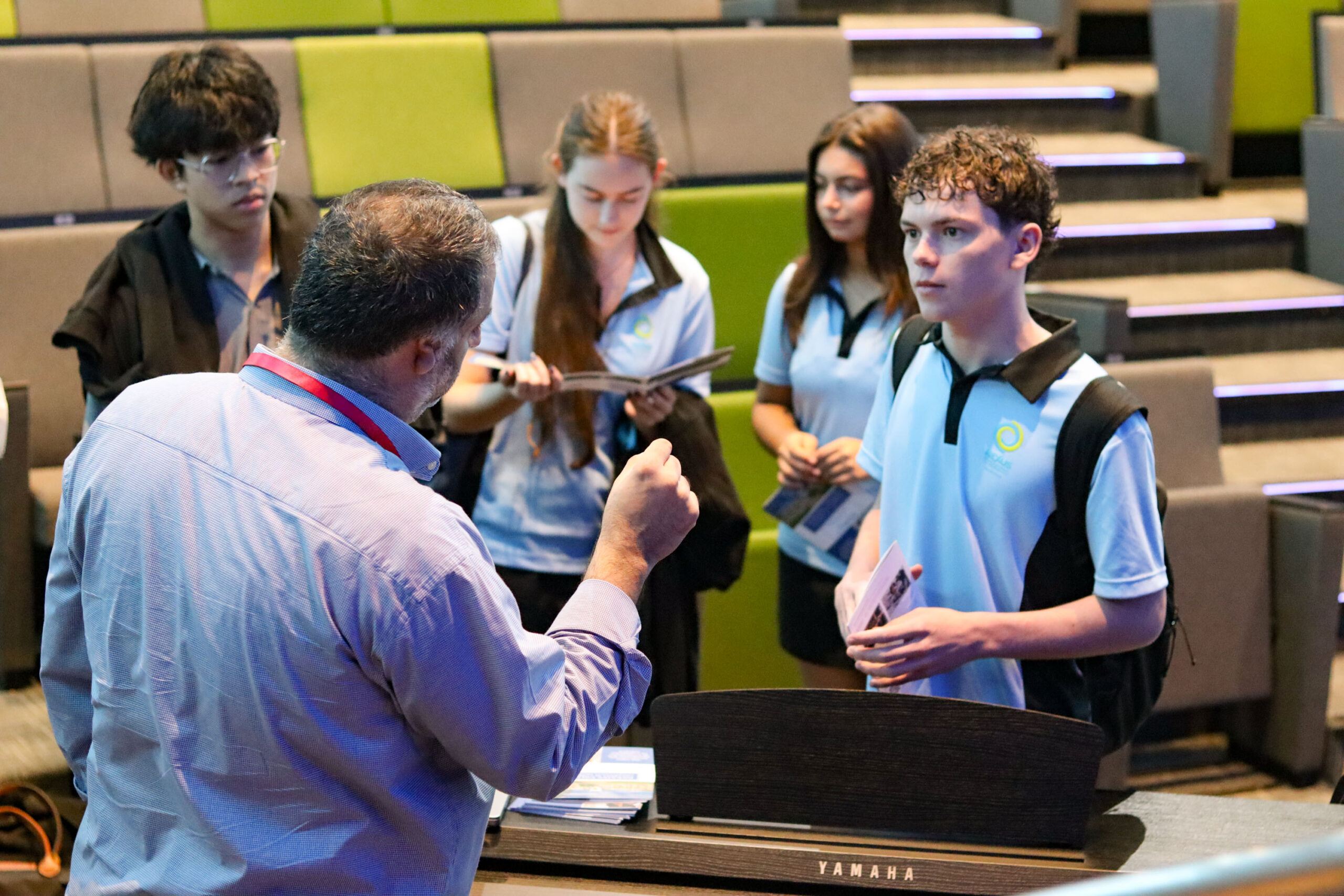
Just a few weeks ago, our Year 12 learners had an inspiring visit from Neil Tsui, a double-amputee and prosthetic wearer. Neil shared the physical and mental challenges he faces on a daily basis, helping our students refine the goals for their product development. When asked about his experience collaborating with our learners, Neil noted, “The whole process was fun to be involved in.”
This collaborative project is a compulsory component for International Baccalaureate (IB) Scientists. What makes it unique is the cross-disciplinary approach: each group consists of learners from various IB Science specialities, including Chemistry, Biology, Physics, Environmental Systems and Societies, and Sport and Health Sciences.
Chanelle Parker, Learning Area Lead for Science, explains that the Science team set the theme of “Human Bionics” with a specific focus on prosthetics. This theme is particularly relevant in Singapore, which has one of the highest amputee rates in the developed world, largely due to complications from Type 2 diabetes. Chanelle invited Neil to launch the project and act as a “consultant,” allowing learners to ask him direct questions about the lived realities of using prosthetics and the logistics of the problems they were attempting to solve.
Solving Real-World Problems with IB Science
The learners’ projects addressed a wide range of hurdles that prosthetic users face, from cost and accessibility to pain management and overall well-being.
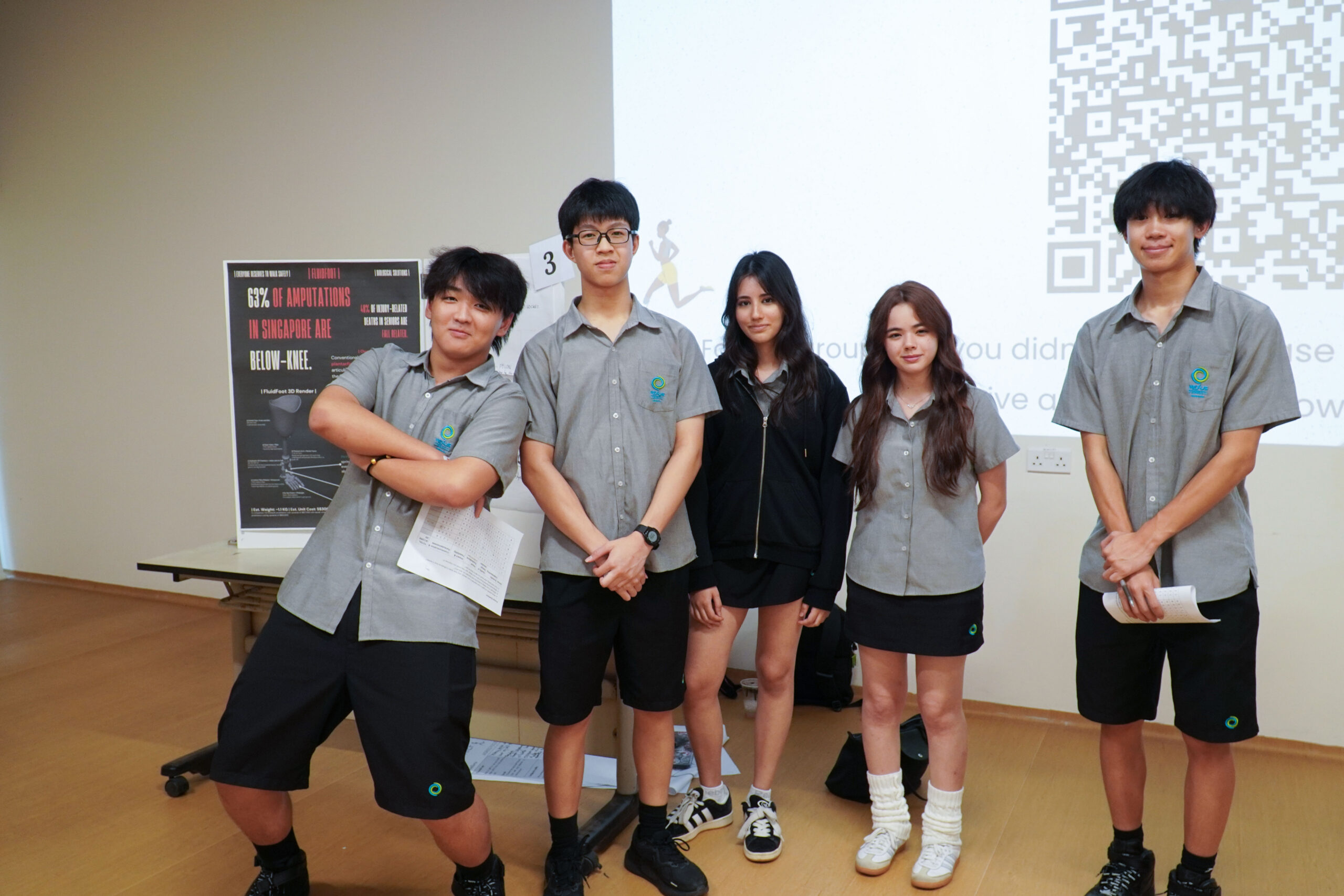
Lenny and Leo, Year 12 learners working on the project FluidFoot, shared that one of their biggest challenges was selecting a problem that would result in a product with genuine, real-life utility. Ultimately, along with teammates Ryan and Skylar, they aimed to develop a lower-limb prosthetic that replicates natural movement through joints that articulate like real foot bones. Ryan explains, “Most prosthetic feet are totally flat, which makes walking downhill on ramps at HDBs very difficult. As many people who receive amputations due to Type 2 diabetes are seniors, a simple fall can be catastrophic. We wanted to create a foot prosthetic that functions more like a natural human foot.”
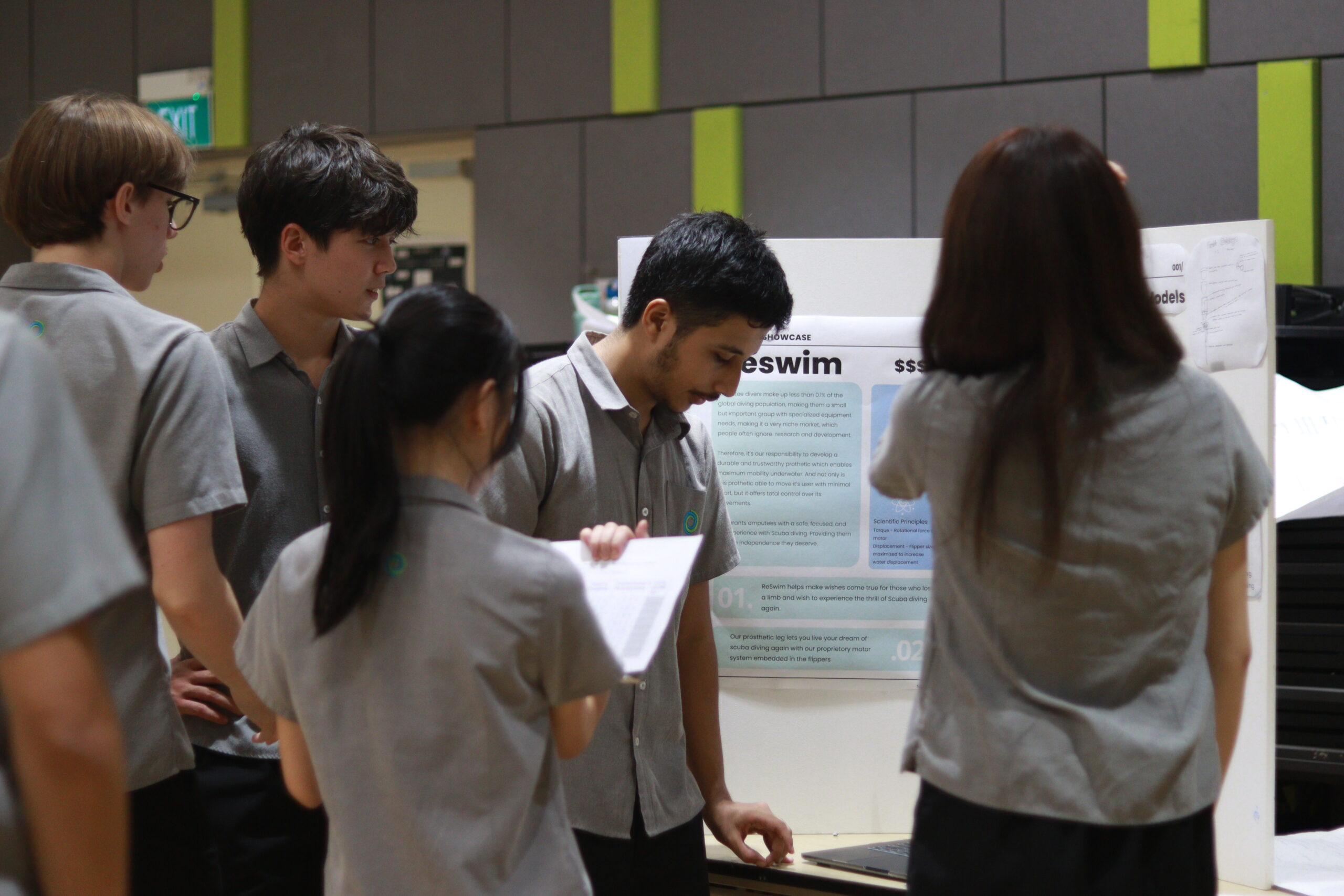
ScubaSwim—a team consisting of Divyansh, Jasper, Alisha, and Caelyn—took the design challenge even further. Not only did they design a prosthetic leg specifically for scuba diving, but they also created a peripheral watch that connects to the limb. This device reacts to water depth and pressure, automatically altering the swimming speed. Divyansh shared that they were inspired by Neil’s talk to design a solution that helps amputees continue pursuing their passion for diving, a niche currently lacking in market options.
Elsewhere, teams like NeuroStrum designed prosthetic hands to enable individuals who have had their dominant hand amputated to continue playing stringed instruments, such as the violin or guitar. The team behind Limb-itless focused on creating a low-cost, highly durable prosthetic specifically for construction workers, aiming to address the high rate of workplace injuries in that sector.
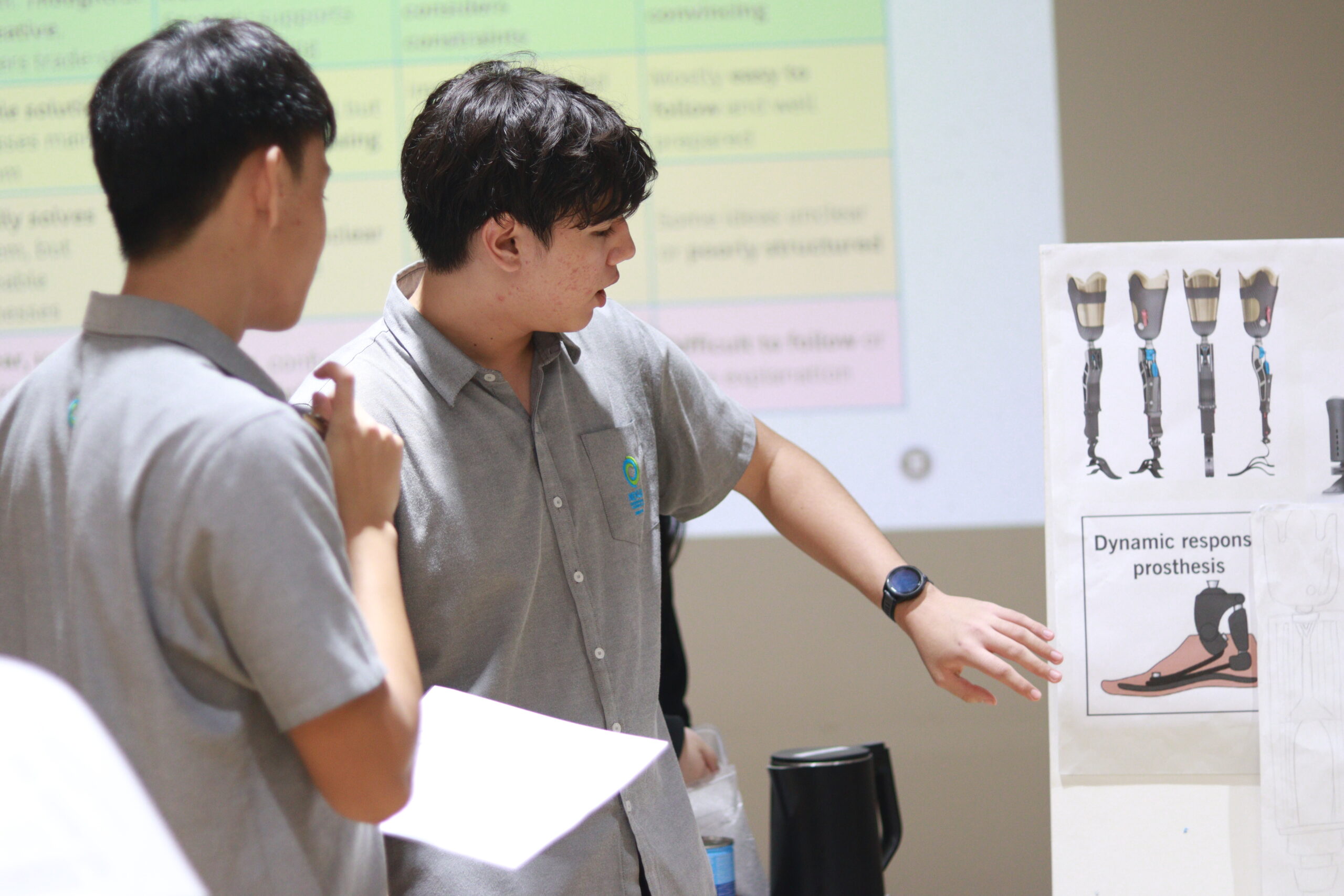
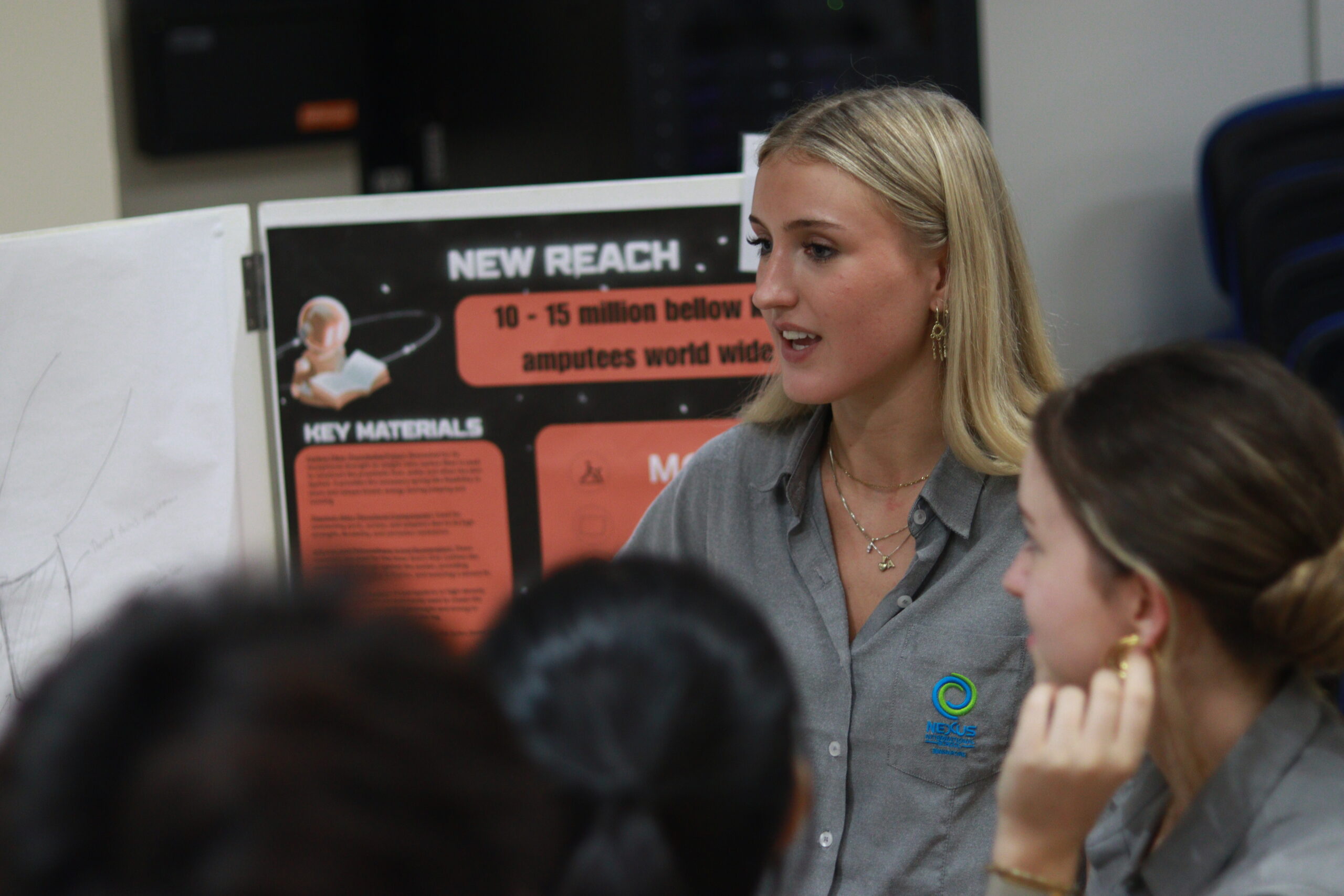
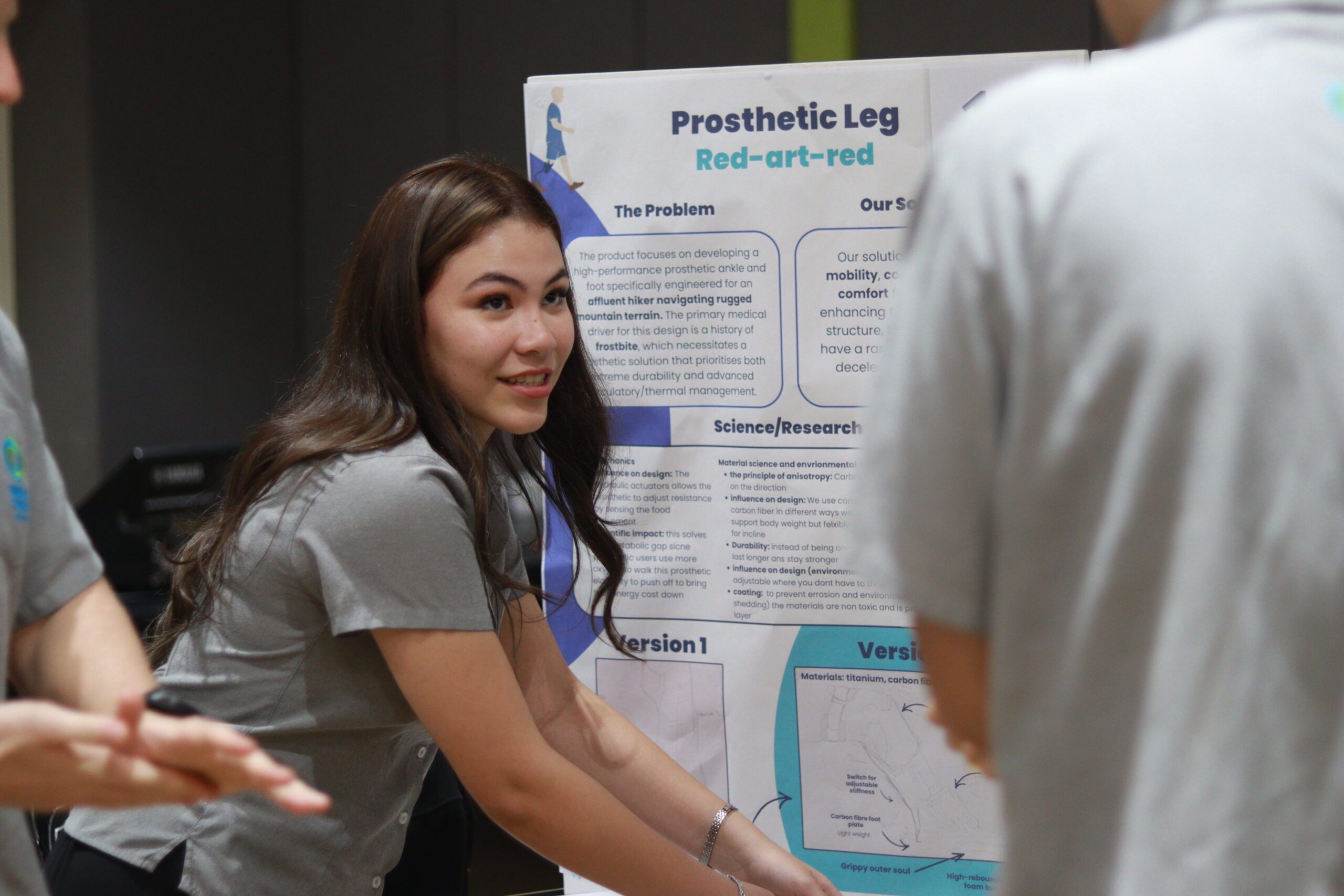
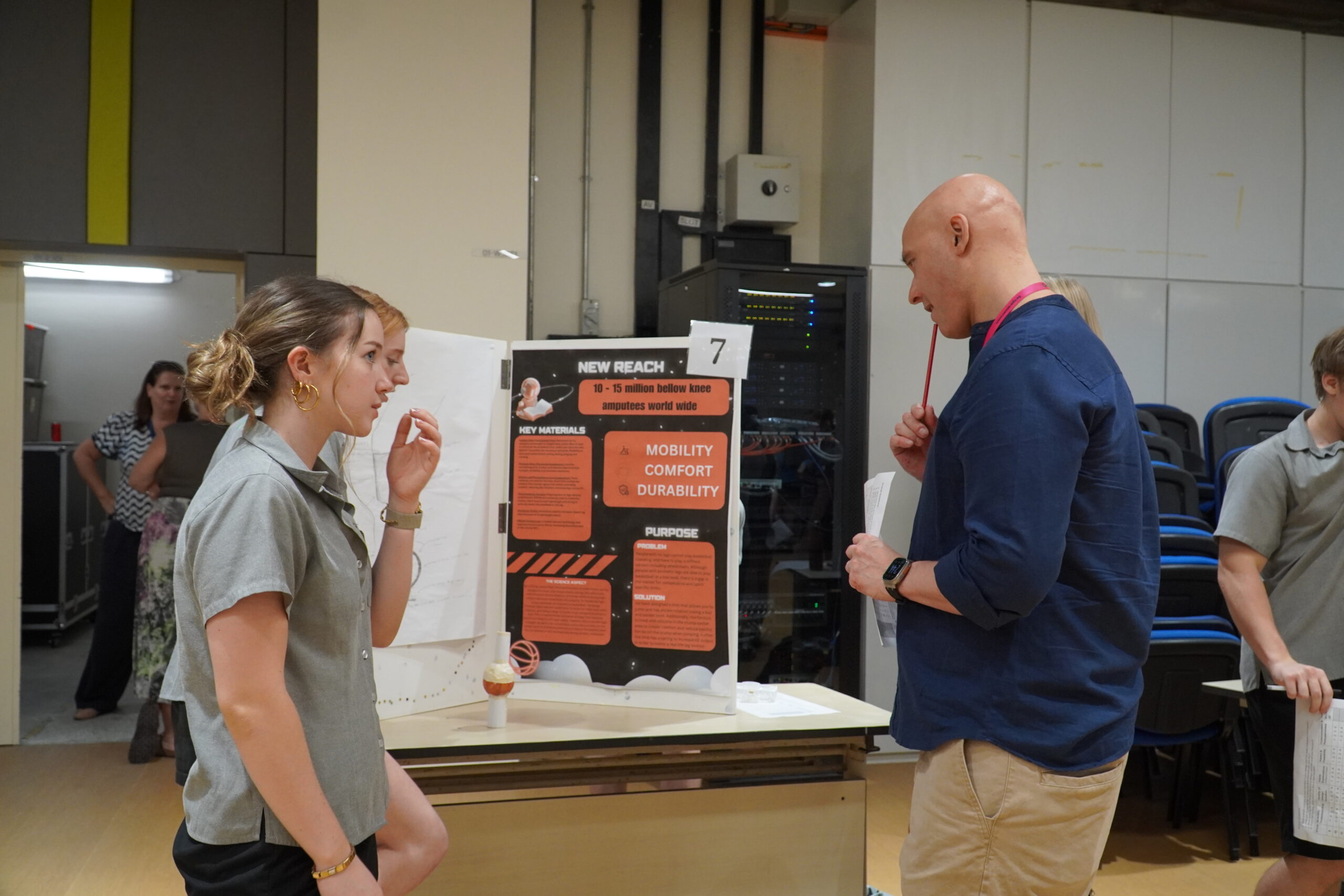
Top left: Neil engaging with our learners.
Bottom left: Project FluidFoot Leo, Ryan, Enayah, Skylar, and Lenny.
Right: ScubaSwim team Divyansh, Jasper, Alisha, and Caelyn.
A Prosthetic Limb That Grows With Its User
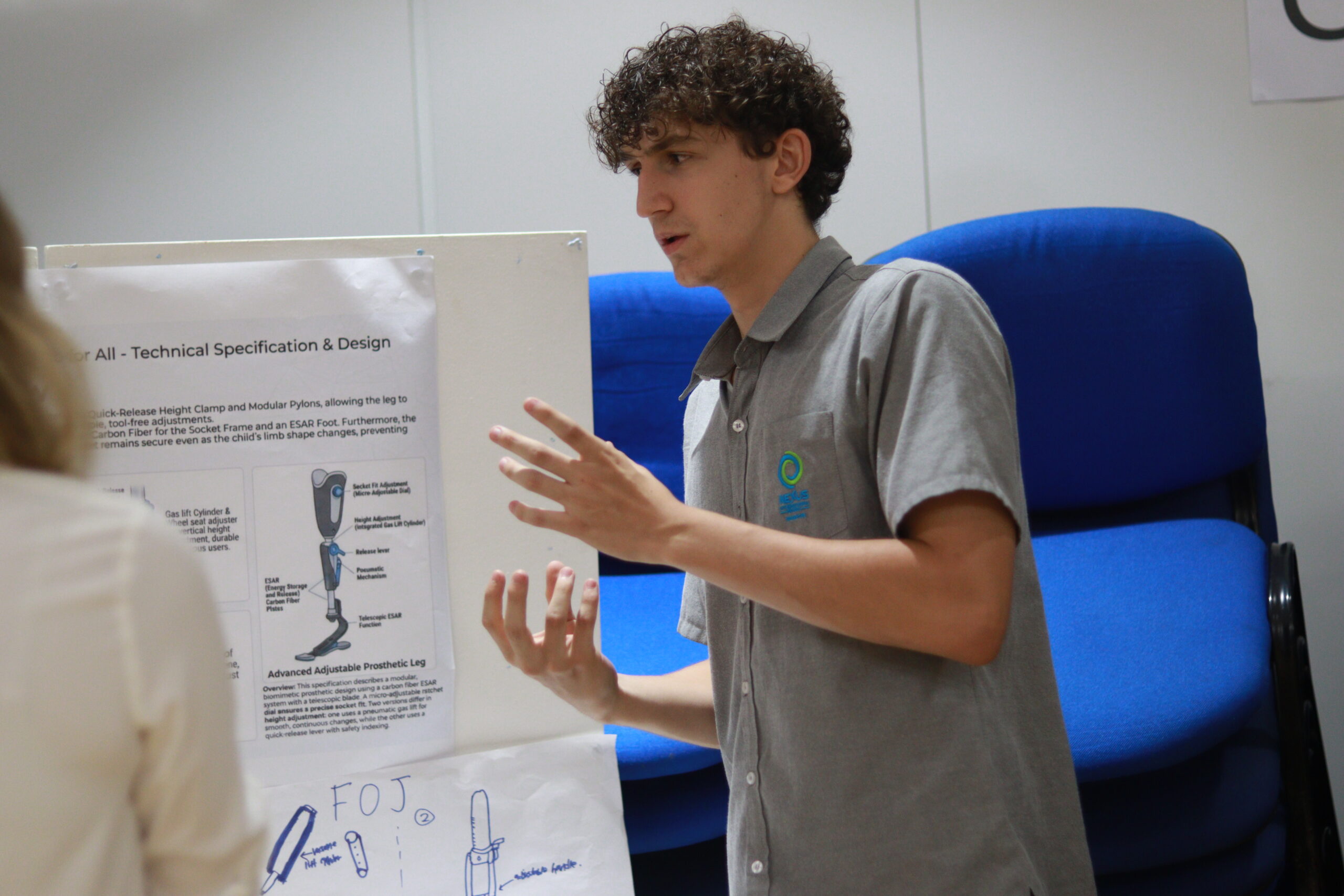
The team behind OmneLimb was particularly passionate about long-term affordability. Their research revealed that over a child’s lifetime, prosthetic costs can run into the hundreds of thousands of dollars. Marc, Lucy, Amy, Henry, and Nicole designed a prosthetic leg that adjusts and expands as the user grows. Inspired by the adjustment mechanisms found in bicycle helmets and office chairs, the team impressed everyone with their research, passion, and detailed design work.
Reflecting on the experience, Marc and Lucy shared that the interdisciplinary collaboration was the highlight of the project: “We all brought something different to the challenge, whether it was the physics, the scientific concepts, or the technical drawings we created as a team.”
Marc explaining OmneLimb
Innovation in Action
The common thread across all these projects is a deep-seated determination to solve existing problems and improve the quality of life for amputees. At Nexus, we don’t just teach; we empower our learners to solve complex problems and think critically about the world around them. These students are a shining example of entrepreneurship and innovation in action, going beyond the textbooks to explore the limits of what is possible.
This project is just one example of how the International Baccalaureate (IB) programme at Nexus bridges the gap between academic theory and real-world impact. Learn more about our IB curriculum and how we support future innovators here.