We are located in central Singapore with close access to two MRT lines and various bus stops.
1 Aljunied Walk, Singapore 387293
A Parent’s Guide: Top Tips For Supporting Your Child Through Their IGCSE Options at an International School
For many families, supporting your child as they choose their IGCSE options is one of the biggest milestones in their secondary school education. It may be the first time that students are making key decisions about their education, the subjects they’re studying and the path that they want to take as they work towards higher education. Similarly, it may be the first time for many students in international schools that their academic progress will be externally validated by an exam board.
In this blog, Jonathan Gunzi, Head of Secondary at Nexus International School (Singapore), explains more about where IGCSEs sit in the international school system, and offers his expert insights and tips on supporting your child through their IGCSE options process.
What Are IGCSEs?
IGCSE stands for International General Certificate of Secondary Education and is modelled on the British GCSE system. Specifically designed for international students with a globally adapted curriculum, IGCSEs offer families a flexible choice of subjects across sciences, humanities, languages, and the arts. Courses are typically studied over a two-year period with assessments taking place through final examinations and coursework elements.
Importantly, whilst IGCSEs are specifically designed for international students, the difficulty is recognised as being equivalent to British GCSEs and they are widely recognised as an academic bridge to the International Baccalaureate Diploma Programme (IBDP) or British A-Level system. What’s more, IGCSEs are recognised by universities and employers worldwide ensuring that students can remain globally competitive.
Why are there different IGCSE exam boards?
There are three major exams boards for IGCSEs offered across the globe: Cambridge International (CAIE), Pearson Edexcel, and Oxford AQA. International schools can choose which exam board they use based on factors including:
Examination style: e.g. 100% final examination, 75/25% coursework/exam etc
Syllabus content: e.g. specific named texts in English Literature; topics to cover in History or Geography
Subject Focus: not all exam boards will offer all subjects, e.g. less commonly-assessed home languages
Importantly, international schools can choose which exam board they offer based on the subjects. For instance, at Nexus International School (Singapore), we offer Cambridge IGCSEs for subjects including English Language, Business, French, Spanish and Chinese as a Foreign Language, and we offer Pearson Edexcel IGCSEs for English Literature, Mathematics, Science and History. This allows our teachers to be more flexible and choose the right IGCSE courses for learners who attend Nexus Singapore.
What are the benefits of studying IGCSEs in an international school?
Studying IGCSEs provides a solid academic foundation for learners and currently is the world’s most popular international qualification for 14 to 16-year-olds. The benefits of studying IGCSEs include:
Global Recognition: IGCSEs are externally assessed qualifications which are recognised globally, and can be used to support university applications worldwide.
Seamless Academic Progression: The IGCSE syllabus acts as a perfect academic foundation for rigorous pre-university pathways like the IB Diploma, A-Levels or Advanced Placement (AP) courses.
Flexible Subject Choices: Students can tailor their education by mixing and matching subjects, allowing them to explore specific passions while maintaining a broad academic base.
Building Strong Study Skills: Preparing students with key study skills like exam technique, revision and time management they’ll need for IB Diploma Programme, A Levels, and beyond.
Application of Knowledge: For many learners, IGCSEs provide the first opportunity to have their application of knowledge externally assessed and validated. Experiencing the exam environment at age 16 can help learners to build resilience and time-management skills needed for later pre-university and university-level examinations.
Development of Critical Thinking Skills: Rather than relying on simple memorisation and rote learning, IGCSE exams are designed to test learners’ problem-solving, critical thinking, research skills and real-world application. At Nexus, we ensure that the skills gained through our Primary Years Programme (PYP) and Middle Years Programme (MYP) directly align with the skills needed at IGCSE.
Culturally Neutral Perspectives: The IGCSE uses international case studies and examples, making the material relatable for students from any country or cultural background.
Tips on how to support your child choosing their IGCSE options
A good international school should provide you with all the information you need to support you and your child as they make their IGCSE option choices. Here are some of the top tips we share with learners and parents at Nexus Singapore:
Choose subjects you will enjoy: Studying a two-year course can have difficult moments and it will be much easier to stay motivated if you have a genuine interest in the subject you have chosen.
Ensure a breadth of subjects, avoid early specialisation: Whilst some learners will be certain of what they want to study at university level, one of the benefits of the IGCSE is the flexibility of the courses on offer. Many international schools will expect that all learners take certain subjects like Maths, English and at least once Science, but with any remaining subjects, try to ensure your child studies a variety of subjects.
Consider the weighting and types of final examination/coursework requirements: Some subjects, like Art or Design, will require a lot of coursework to be completed over the course of two years to show a learner’s portfolio of work, whereas other subjects like Maths will be more reliant on final examinations. Other subjects, like foreign languages (French, Spanish etc) and Music/Drama may include oral exams, performance or composition elements. Try to take subjects where you’ll have a range of assessment types so that workloads don’t become too heavy at one point of the year.
Check when your child will be sitting their exams and whether they’re eligible for early entry: Occasionally, schools will recommend certain learners for early entry into exams in Year 10 or the start of Year 11. This may be if they are particularly gifted at a subject. For instance, at Nexus, some of our learners take their Mathematics IGCSE in Year 10 and an additional Further Pure Mathematics IGCSE in Year 11. Some international schools may also suggest that your child takes an IGCSE in their home language in Year 10.
Speak to your child’s teachers and ask any questions you may have: We know that a strong home-school partnership is essential to a learner’s success which is why we always encourage our parents to speak to the teachers who know your child best. Whether it is through a parent-teacher conference, IGCSE Options Information evening, or a simple email, your child’s teachers should be well-placed to answer your questions about IGCSE courses and also your child’s potential in that subject. You can also speak to the school’s Careers and University Guidance team if you have specific questions about what your child may need to study in order to pursue a specific career.
Is there anything else I should ask when my child is choosing their IGCSE options?
If you’re considering sending your child to an international school that offers IGCSEs like Nexus Singapore, or if you’re already at a school that offers IGCSEs, you may also want to ask the following questions to give you an idea of how else an international school can support your child.
Do you offer multiple tiers of entry for certain subjects? Certain subjects will have Foundation and Higher entry tier levels in exams so that learners of different academic abilities can be supported.
What trips or opportunities outside of the classroom are compulsory/available? Some subjects, like Geography, may have compulsory field trip elements whereas other subjects may have optional opportunities to extend your child’s learning beyond the classroom.
How can you support my child if they require exam access arrangements? It is important to check that your international school is able to support your child effectively, should they require any exam access arrangements or additional support throughout their two-year course. If you are worried about your child, it’s always best to speak to the Learning Support team and your child’s teachers.
What are your previous IGCSE results and what progress do learners make at your school? Most international schools will publish their overall IGCSE results on their websites, but remember to consider what type of school you are looking at. Academically selective schools may publish extremely high results because they enter learners who are more likely to achieve top grades. Likewise, academically inclusive schools may publish results which represent a wider range of academic ability. Many international schools will also post a value-add score which shows on average how much progress a student has made from their predicted grades.
Do you offer online exams? As exam boards look to modernise their exam experience, some schools may start to offer online exams for students. Ask about how your school is looking to manage this and any important information you need to be aware of.
Whilst it is understandable that many learners feel overwhelmed during this process, choosing IGCSE options should feel like an exciting time for your child as they start to consider their life beyond school.
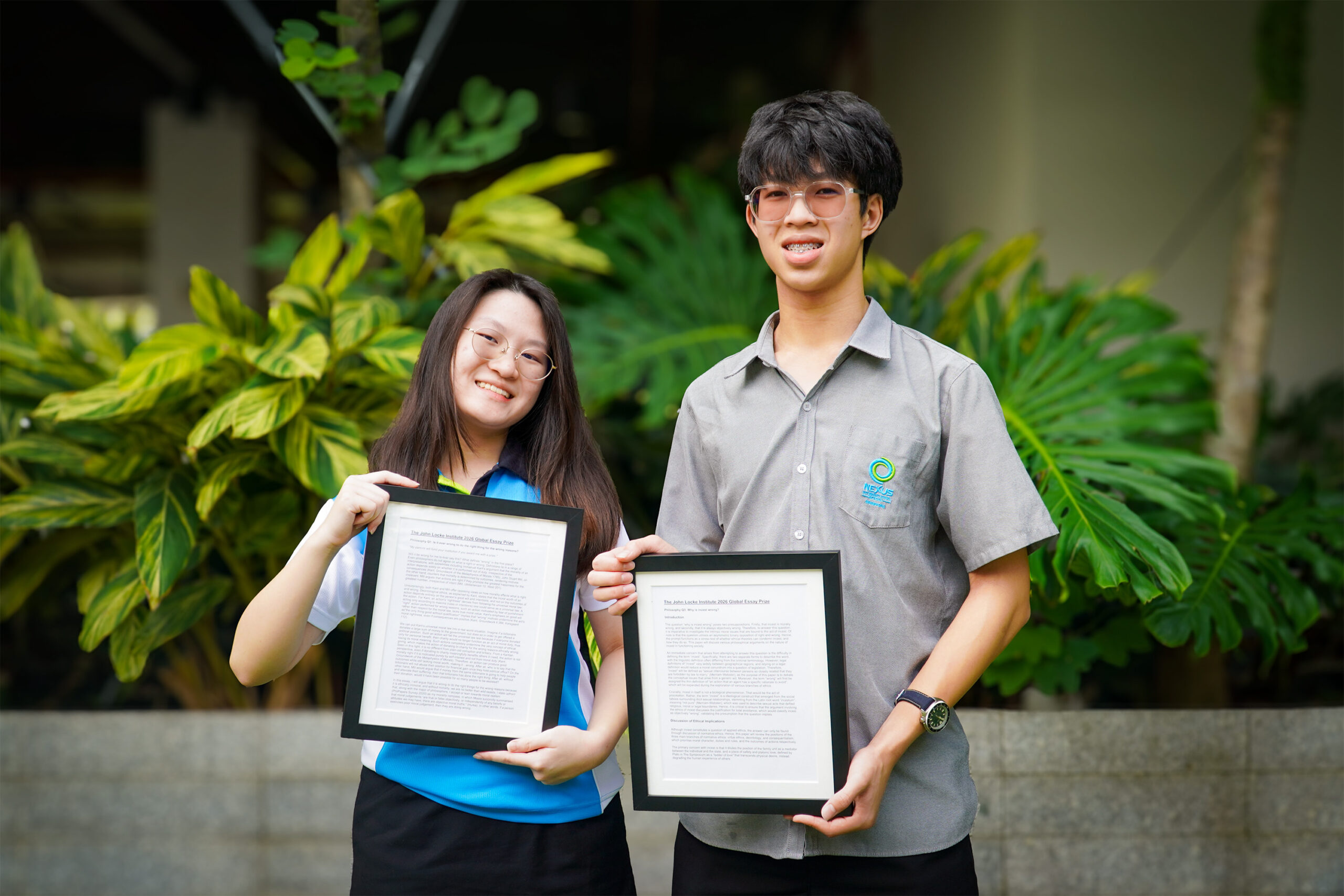
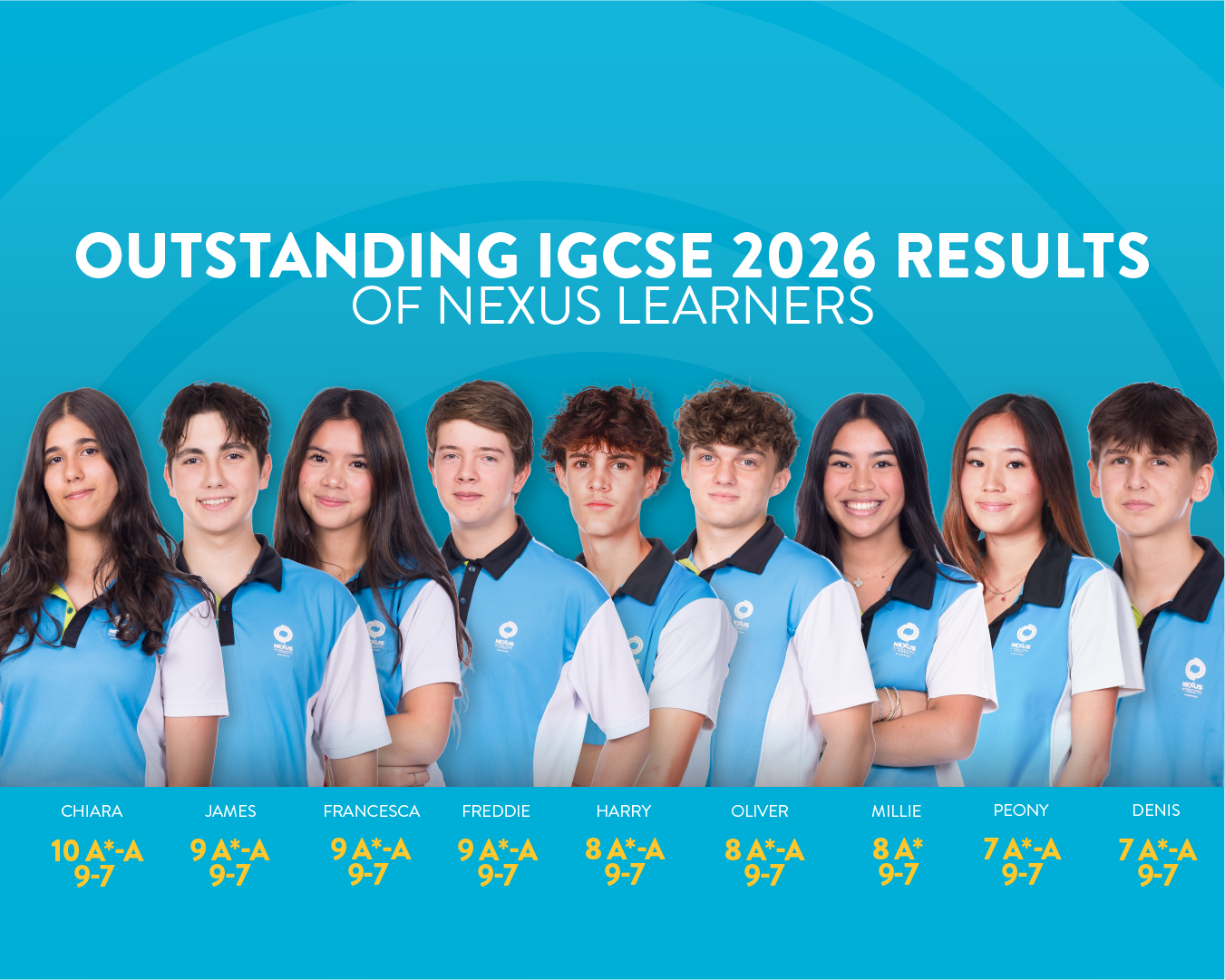
At Nexus Singapore, our teachers work closely with families to set our learners up for success at IGCSE and beyond. In 2026, we were proud to have 50% of all grades awarded at A*-A or 9-7, with A*/9-8 being the most commonly awarded grade in subjects including Further Pure Mathematics, Physics, English Literature and more.