We are located in central Singapore with close access to two MRT lines and various bus stops.
1 Aljunied Walk, Singapore 387293
Nexus Hackathon 2025: Harnessing Innovation for Social Impact
Over two exciting days, learners from Years 9 to 13 took on the 2025 Nexus Hackathon challenge to “Harness Innovation for Social Impact” by designing solutions that could make a positive difference in their communities and the wider world.
In just 36 hours, our learners brainstormed, built, and presented ideas tackling real-world issues such as inclusivity, wellbeing, and digital safety.
The result? A showcase of imagination, purpose, and teamwork that captured exactly what innovation at Nexus is all about.
From wellness apps to social impact platforms, the Hackathon proved that Nexus learners are not just confident digital users, but true digital leaders. Each project, from gamified learning and AI-powered safety tools to inclusive community apps, reflected how innovation at Nexus is purposeful, creative, and designed to make a difference.
For Hemangi Aire, our Head of Computer Science and Hackathon organiser, the event represented more than technical skill; it was about mindset.
“Many of our Year 9 learners took part for the first time this year, and they amazed me with their focus and commitment,” she said.
She was equally impressed by the dedication shown across all year levels, as learners worked through breaks, driven purely by the desire to make their ideas come to life and be the best they could. “It’s that curiosity and resilience that makes Nexus learners exceptional.”
Best Idea: “No Scope of Failure” by Lyndsay (Year 12)
Taking the top honour this year was Lyndsay, a Year 12 learner who worked independently to create No Scope of Failure. Her idea was an interactive, gamified learning app inspired by the mechanics of action and strategy games. The concept reimagined how learners stay motivated, using game-based design to turn academic content into skill-building challenges.
In her project, No Scope of Failure avoids the pitfalls of rote learning platforms by focusing on understanding rather than memorisation. Every aspect, from the original illustrations to the game interface, was designed entirely by hand, highlighting Lyndsay’s creativity and authenticity.
Reflecting on her journey, Lyndsay shared, “It felt especially nerve-wracking this year since I was set on participating solo. The experiences from last year helped me calm my nerves, since I had a better understanding of time management and reminded myself that I was on track.”
Her project was inspired by her own experience as an IBDP learner. “The ‘failure’ represents my experience of stress and the fear of academic failure. I wanted to create a product that would help students build their confidence so they don’t have to worry about the future that’s yet to come, but also erase the stress throughout the process.”
When asked how it felt to win Best Idea, she said, “It’d be a lie if I said I don’t feel ecstatic about this whole thing. I still do until now. There were just so many amazing innovations created by the other students. This year was just on a next level.”
Her determination resonated deeply with everyone who watched her journey. As she reflected, “Someone like me who doesn’t have the greatest pitching skills nor experience in coding being able to win a Hackathon tells me that the countless challenges around us just mean opportunities for change, and innovation begins with you not being afraid of that challenge.”
Best Idea: “Pinpoint” by Beavers 2.0 (Kenzo, Joshua, Jerry, Vlad)
The Beavers 2.0 team impressed the judges with PinPoint, a smart, map-based platform designed to make event discovery safer, easier and more meaningful. The idea grew from a collaborative and fast-paced brainstorming process. As Kenzo explained, “We began by identifying key problems people face around the world. Each of us had to write three ideas within a 20-minute time frame, and we realised many of our ideas shared similar patterns. I then looked online for innovative social concepts others had built and took inspiration by combining two completely unrelated ideas into one.” After narrowing their choices down, the concept that became PinPoint stood out.
Year 12 learner Josh shared a similar motivation: “We realised that a lot of times people nowadays find it very hard to socialise. As well as finding it hard to find events fitting their interests, many events get scattered and lost in the realm of social media.”
PinPoint uses AI and real-time data to help users find verified events, meet people with similar interests and stay aware of safety considerations in their surroundings. With accessibility features, personalised recommendations and live safety overlays, the platform aims to support wellbeing and build stronger community connections.
The judges praised the project’s research-driven thinking, thoughtful design and technical depth, describing it as “a real example of future-ready learning in action.”
Both learners reflected on how teamwork shaped their success. Josh shared, “We worked very well as a cohesive unit. We’ve known each other for years now. Coming out of the Hackathon, I realised how important being connected with your peers can be to the outcome of your work.”
Kenzo added, “We all worked extremely well together, and everyone had their own specialities to bring to the table. This was the first time we attempted a hackathon as a group, and it turned out great. I believe we all worked hard and pushed ourselves to accomplish what we achieved in the end.”
Winning the award was a special moment for the entire team. “I was overjoyed to have won an award like that,” Kenzo said. “We’re all very thankful that the rest of the judges shared our perspective and believed in the idea.”
The Best Pitch award went to the all-girls team, GoldBears, for their project, SheGuide, a mobile app designed to support women facing workplace discrimination. Featuring learners from Years 10 to 12, the team demonstrated outstanding collaboration across year groups, combining diverse perspectives and skills to bring their idea to life.
SheGuide connects users to professionals and peer support networks, offering legal information, AI-powered guidance, and emergency safety features. It also allows women to review workplaces anonymously and access motivational resources that encourage resilience and advocacy.
For team leader Nicole, Year 12, the inspiration behind SheGuide came from personal experience and a desire to empower women. “As an all-girls team, we naturally gravitated toward issues surrounding gender inequality. I’ve always wondered why there are so few women in STEM, and through research, I learned that one of the biggest barriers is a discriminatory or discouraging environment.”
She also shared how meaningful it was to work with a mixed-age group. “Working with a large, mixed-age group was smooth and rewarding. Honestly, I didn’t feel a big gap between us IBDP learners and the Year 10 girls. We learned from each other and shared ideas very openly. Everyone contributed, and that collaboration became one of the most valuable parts of the experience.”
Katy added on, saying, “We divided our tasks depending on our different skills. Although, even if only 3/5 of us were in Computer Science, we all found it fun to experiment with different areas, like when I tried out Figma for the first time.”
For Kavya, an IBDP learner who is not studying Computer Science, joining a Hackathon for the first time brought both nerves and joy. “I was very nervous at the start. I wasn’t even part of a group yet, but Ms Hemangi suggested I join a wonderful team of girls with whom I had the most memorable time. We got along so well and carved an impactful project in such a short span of time.”
She also reflected on the broader message behind their work. “When one woman says ‘no,’ another will say no. This chain will pass on to create a stronger female workforce, address gender biases and promote more girls to access education and succeed in careers.”
The experience left a lasting impact on her. “Speaking on stage and having the privilege to talk with esteemed members in IT really helped me grow and improve my confidence, speaking skills and leadership qualities. I am really grateful for the opportunity and all of the learners and teachers who were part of this event to make it happen.”
The judges praised the team for addressing a global issue through technology and for their confident, thoughtful delivery.
Other Notable Mentions
Best Design:Mapping Hope by Arthur, Taylor, and Yuze, a real-time crisis-mapping system that connects people in emergencies to local aid and resources, showing strong visual clarity and community impact.
Best Technical Implementation: Hoca by Divyansh, Julian, Mohan and Rayed, a web-based learning platform designed to personalise revision and reduce academic stress.
Emerging Talents:Better Future by Butet, Sophie, and Samarth, a multi-functional app to help people with disabilities communicate and manage health challenges through tools like a heart monitor, sign-language recognition, and speech-to-text assistance.
A Showcase of Innovation and Purpose
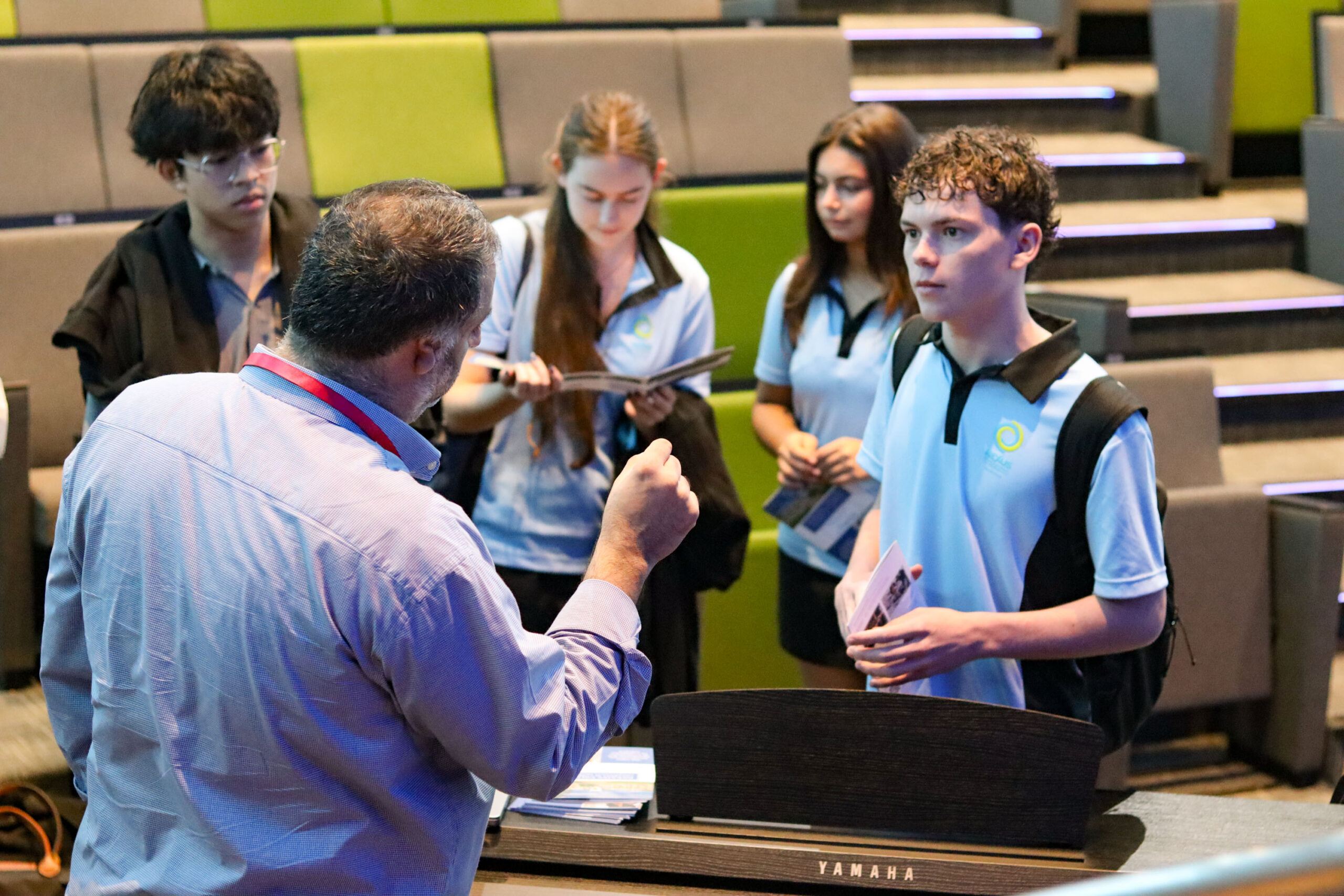
The Hackathon concluded with participants presenting their ideas to a panel of judges that included Janina Kutyn (iOS Engineer), Nadia Lin (Associate at Expara), and Dr Heather Millington (Head of Secondary School). The judges challenged teams to think critically about how their projects could work in the real world, asking thoughtful questions about scalability, entrepreneurship, and long-term impact.
They were highly impressed by the quality of the presentations, praising the learners for how much they achieved in such a short time and even remarking that some of the projects were comparable to those produced by master’s level university students.
“I was blown away by the level of quality in all the presentations,” shared Janina. “Each and every participant should be incredibly proud of what they created in such a short time.”
Dr Heather agreed, reflecting on the maturity and empathy learners displayed throughout the event. “The learners communicated clearly and confidently and did a great job at explaining their ideas during the presentation. The stand out for me was how much empathy the learners showed. It was clear they wanted to help others, and that this had motivated them. I felt so proud to see how Nexus learners wanted to make meaningful contributions to society and make the world a better place.”
Computer Science teacher Ciaran Frayne echoed this sense of pride, highlighting how the Hackathon captures the spirit of authentic learning at Nexus. “I was pleased to see such a diverse range of ideas being discussed and presented. We benefited greatly from having learners of different ages and backgrounds working together.” He added that the shared urgency of the event helped learners bond quickly. “It was interesting to observe how the shared goal and the pressure of preparing their ideas by the Saturday deadline helped learners form quick connections. Some of the groups that impressed us most had only formed on the day of the Hackathon.”
When asked about standout projects, he commented, “I’m reluctant to single out any group because each faced different challenges, and my role was to support and encourage all learners. I was genuinely proud of every learner involved and grateful that they gave up their Saturday to participate. Their energy and passion were inspiring.”
Ciaran also reflected on how far the Hackathon has come since he joined Nexus. “Nexus has so many strengths and so many events that it creates a terrific sense of community. I truly appreciated the learner volunteers who supported us across both days. It was also very special to see so many parents attend the Auditorium presentations to support the learners.”
Duncan Shiel, Deputy Head of Secondary School, added that the Hackathon demonstrates the school’s forward-thinking culture. “During the ideation phase, it was fascinating to hear the learners’ ideas for problems they believe they can address. Some teams had half a dozen compelling ideas that would make for fantastic products, and they then faced the difficult task of narrowing them down to just one. I was particularly taken by an idea that used machine vision to teach sign language in a way akin to Duolingo. Overall, it was so heartening to see learners consider the challenges facing the world. Rather than feeling overwhelmed and helpless, they showed they were creative, passionate, and ready to take on the future.”
Congratulations to all our learners for their hard work, and thanks to our dedicated staff and judges for inspiring and supporting them throughout this incredible event.