We are located in central Singapore with close access to two MRT lines and various bus stops.
1 Aljunied Walk, Singapore 387293
The Art of Teaching: Bringing Maths to Life in Year 4
At Nexus International School Singapore, our approach in the Primary Years Programme (PYP) encourages learners to explore concepts, communicate their thinking and apply their understanding in meaningful ways. In Maths, this means going beyond just finding the right answer. Rather, our teachers create opportunities for learners to explore, reason and understand mathematical concepts in different ways.
In this edition of The Art of Teaching, Year 4 teacher and Year Leader Suzie Bacon shares how she brought ordering numbers to life through a physical, collaborative game, and why giving learners opportunities to think, communicate and take ownership is an important part of learning Maths in Primary School at Nexus.
Making Maths Physical
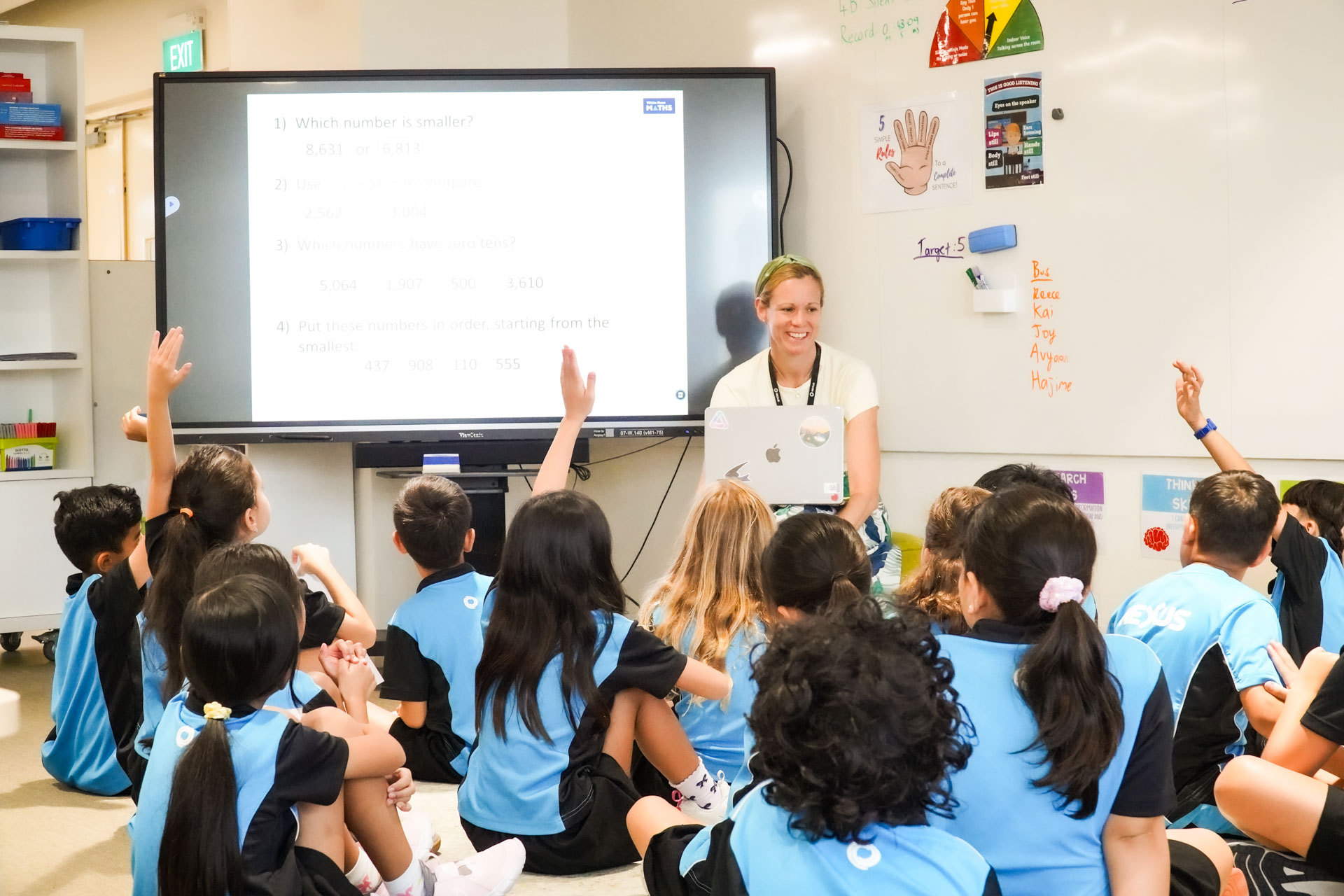
In Year 4, we have been working on place value and developing our understanding of four- and five-digit numbers. Place value provides an important foundation for so much of the mathematics that follows, so it’s important that learners have a secure understanding of the value of each digit and how we can use place value to compare numbers systematically.
For this lesson, I wanted to give learners an opportunity to experience that mathematical thinking in a different way.
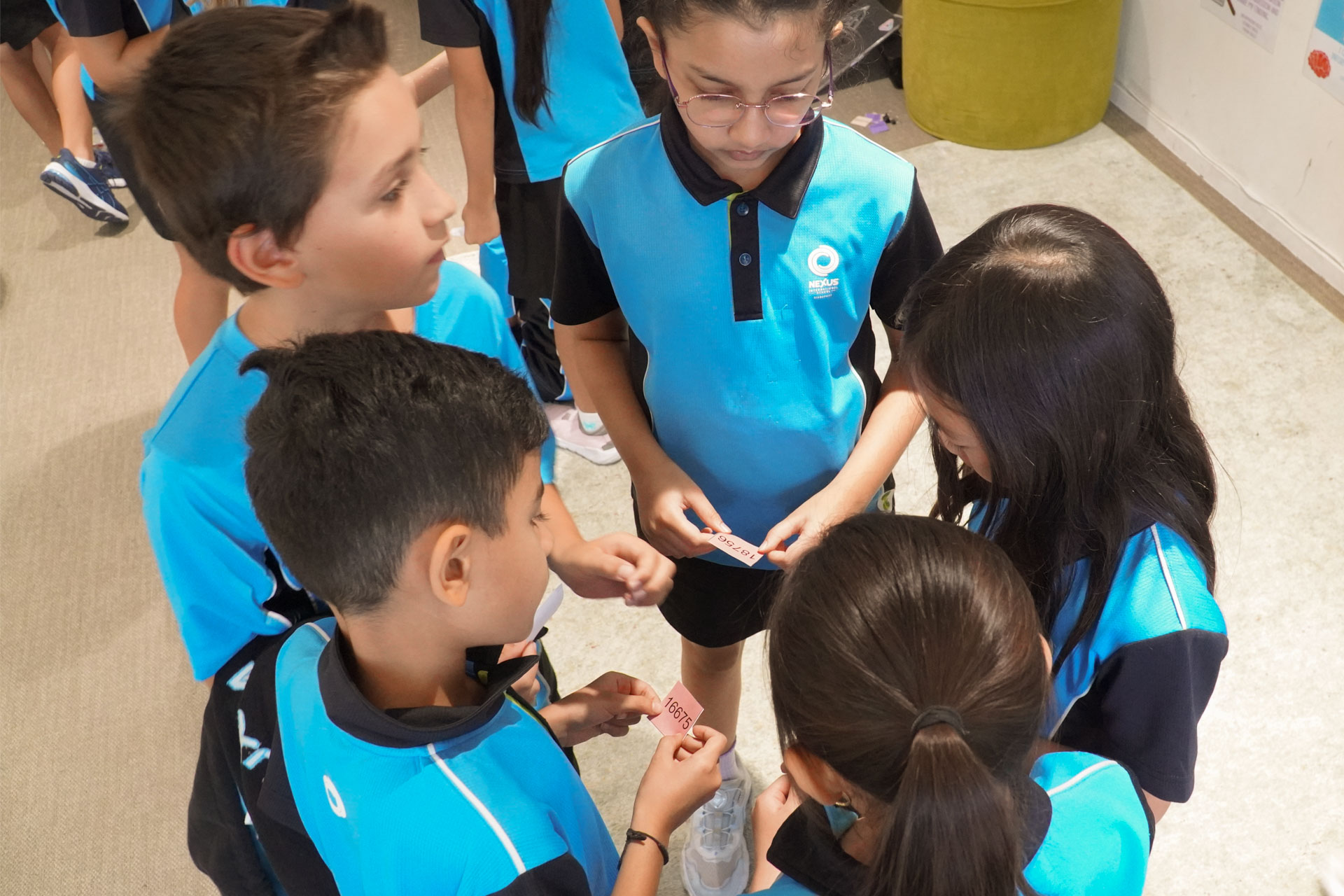
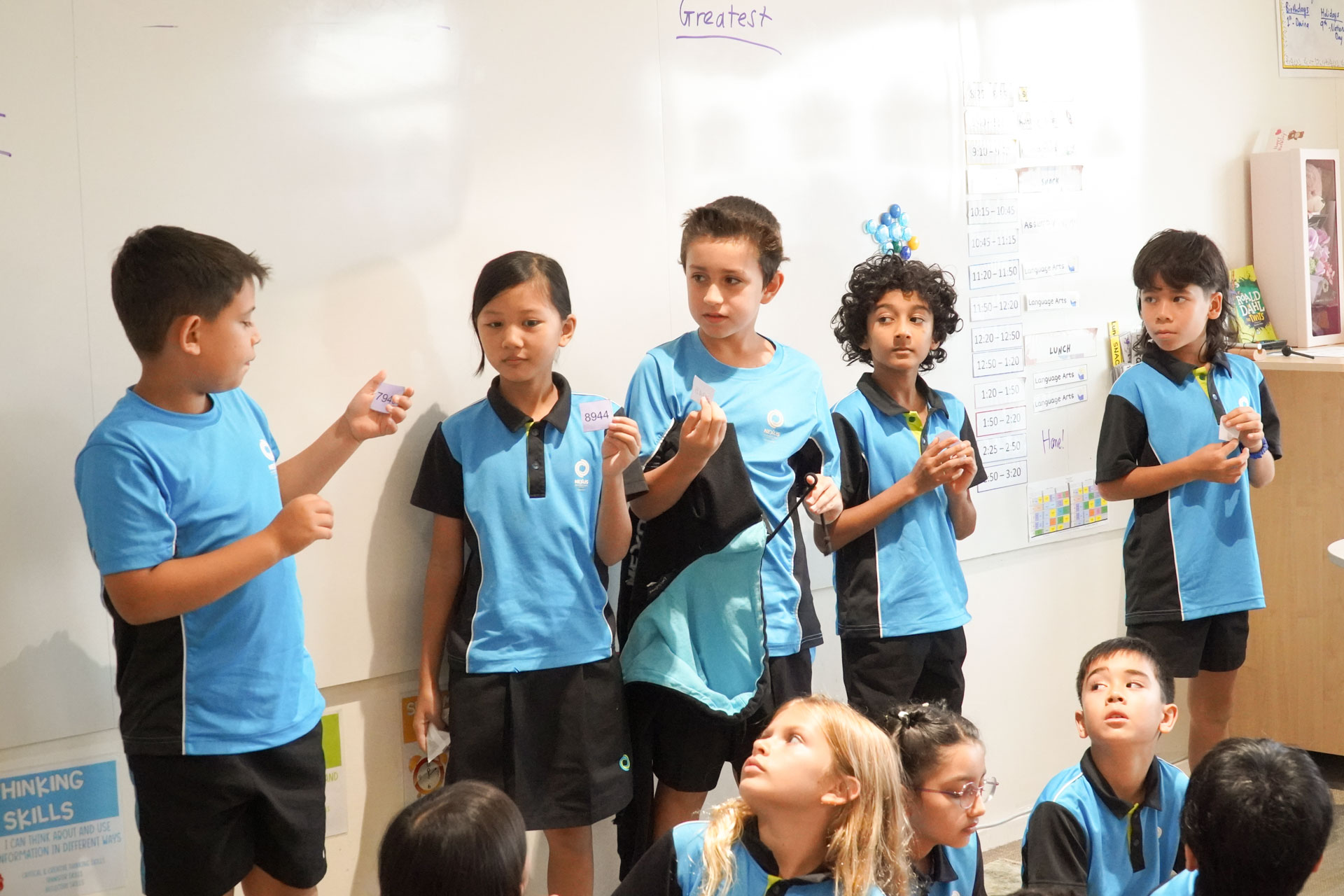
Each learner was given a coloured number card and had to find the other learners with the same colour. Once they had found their group, their challenge was to arrange themselves from the smallest to the greatest number.
Although it looks like a simple game, there’s lots of mathematical reasoning happening. Learners have to compare their numbers, communicate their thinking and justify where they think each number belongs.
We then repeated the challenge with less time. They were applying the same mathematical understanding while developing greater fluency and confidence as they became more familiar with the process.
We want learners not only to be able to find an answer, but also to think mathematically and communicate how they got there.
Suzie Bacon, Year Leader (Year 4) & Year 4 Homeroom Teacher
Learning Through Collaboration
There’s an important step between having a teacher model a concept and then asking learners to apply it independently. This activity gives them an opportunity to explore the mathematical concept together first.
Learners are talking, reasoning, comparing and explaining rather than simply recording an answer on a page.Importantly, it also allows learners at different stages of understanding to learn alongside one another. A learner who is still developing the concept can hear mathematical thinking modelled by their peers, while a learner who is already secure can deepen their understanding by explaining and justifying their reasoning.
Alongside the mathematical skills, we were also focusing on the IB Learner Profile attributes of being a Communicator and a Thinker. Learners had to articulate their mathematical thinking, listen to other people’s reasoning and sometimes justify or change their own thinking based on what they heard.
We want learners not only to be able to find an answer, but also to think mathematically and communicate how they got there.This is something that supports learners as they move into the Middle Years Programme (MYP) and beyond.
Seeing the Learning in Action
As an educator, one of the most valuable parts of an activity like this is the opportunity to listen to learners’ conversations.
As the learners work together, I can see where they are confident, identify any misconceptions and understand who may need additional support or greater challenge as we move forward.
When we planned this unit as a Year 4 team, we wanted to give learners opportunities toexperience and talk about mathematics, rather than only seeing it represented on a page.
Observing and listening to learners gives us information that we can use alongside their independent work. It helps us understand where they are now and what they might be ready for next, so that we can provide the right support and challenge.
Giving Learners Choice
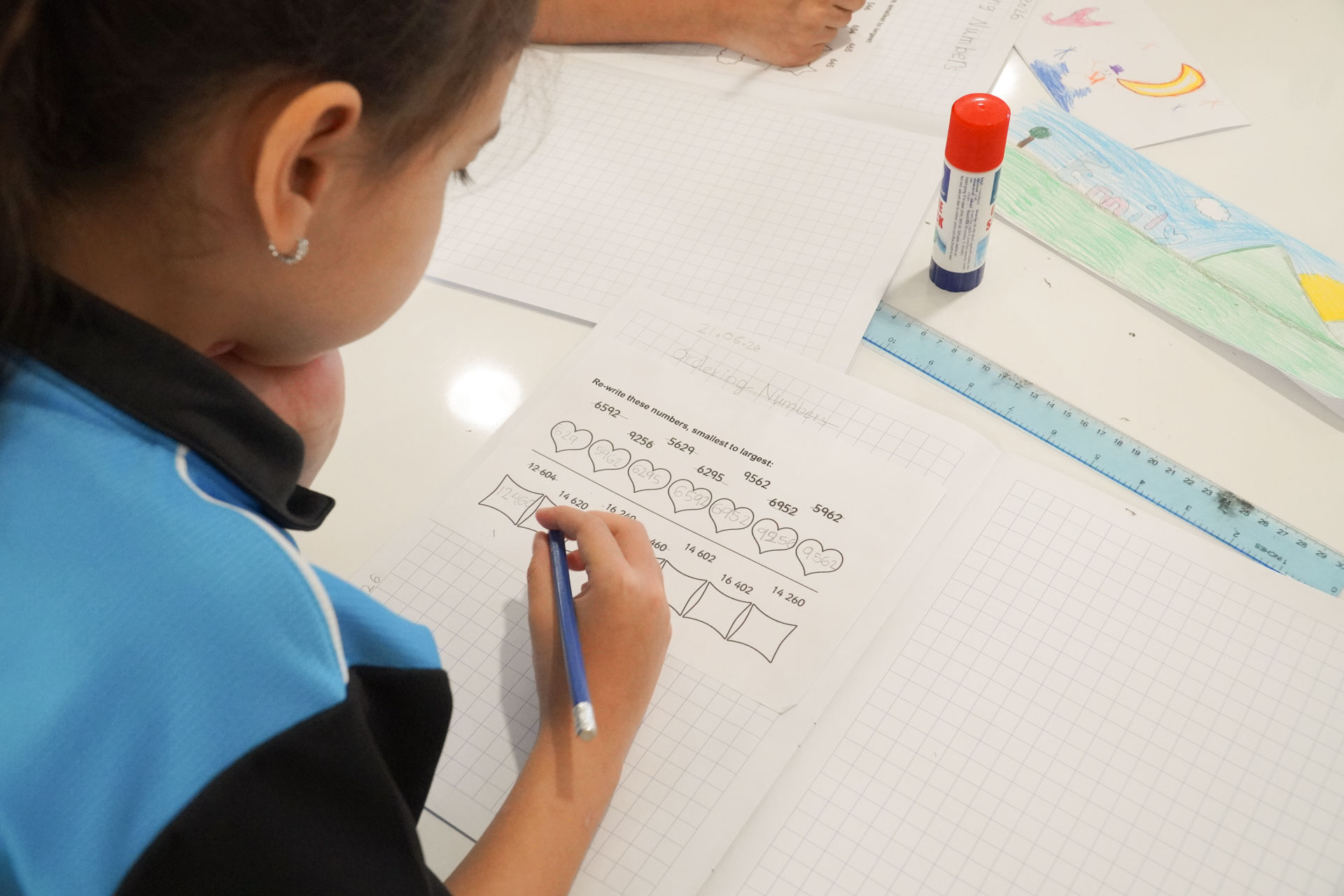
For the independent part of the lesson, learners had a choice of two worksheets. Both asked them to order numbers from smallest to greatest, but they could choose to work with three- and four-digit numbers or challenge themselves with four- and five-digit numbers.
This gives learners agency and ownership over their learning, while also ensuring that the challenge is appropriate. We encourage them to choose something that stretches their thinking without overwhelming them.
Over time, we want learners to become increasingly reflective and understand themselves as mathematicians: to recognise when they need to consolidate something and when they’re ready to push themselves further.
As the teacher, I’m there to guide that choice too. Learner agency doesn’t mean they’re making those decisions completely on their own.
Making Maths Meaningful
Bringing Maths to life helps learners see it as something they can explore, discuss and make sense of, rather than simply a set of questions they need to get right.
Different learners make connections in different ways. For one learner, the teacher modelling might be when the concept clicks. For somebody else, it might happen when they’re physically putting the numbers in order and discussing it with their friends. For another learner, it might come when they apply that understanding independently.
By moving from modelling, to collaborative exploration, and then to independent application, we’re giving learners different opportunities to build that understanding.
Ultimately, we want our learners to see Maths as meaningful, achievable and something they can feel confident about. Sometimes you can actually see that moment during an activity like this when the penny drops for a learner, and that’s lovely to see.
Keep exploring learning at Nexus
For our current families, keep an eye out for upcoming Mathematics workshops and events to discover more about how we approach Maths at Nexus.
Considering Nexus for your child? Book a Personalised Tour to experience our learning environment for yourself, or explore our Innovative Learning page to discover more about how we support every learner to achieve their potential.