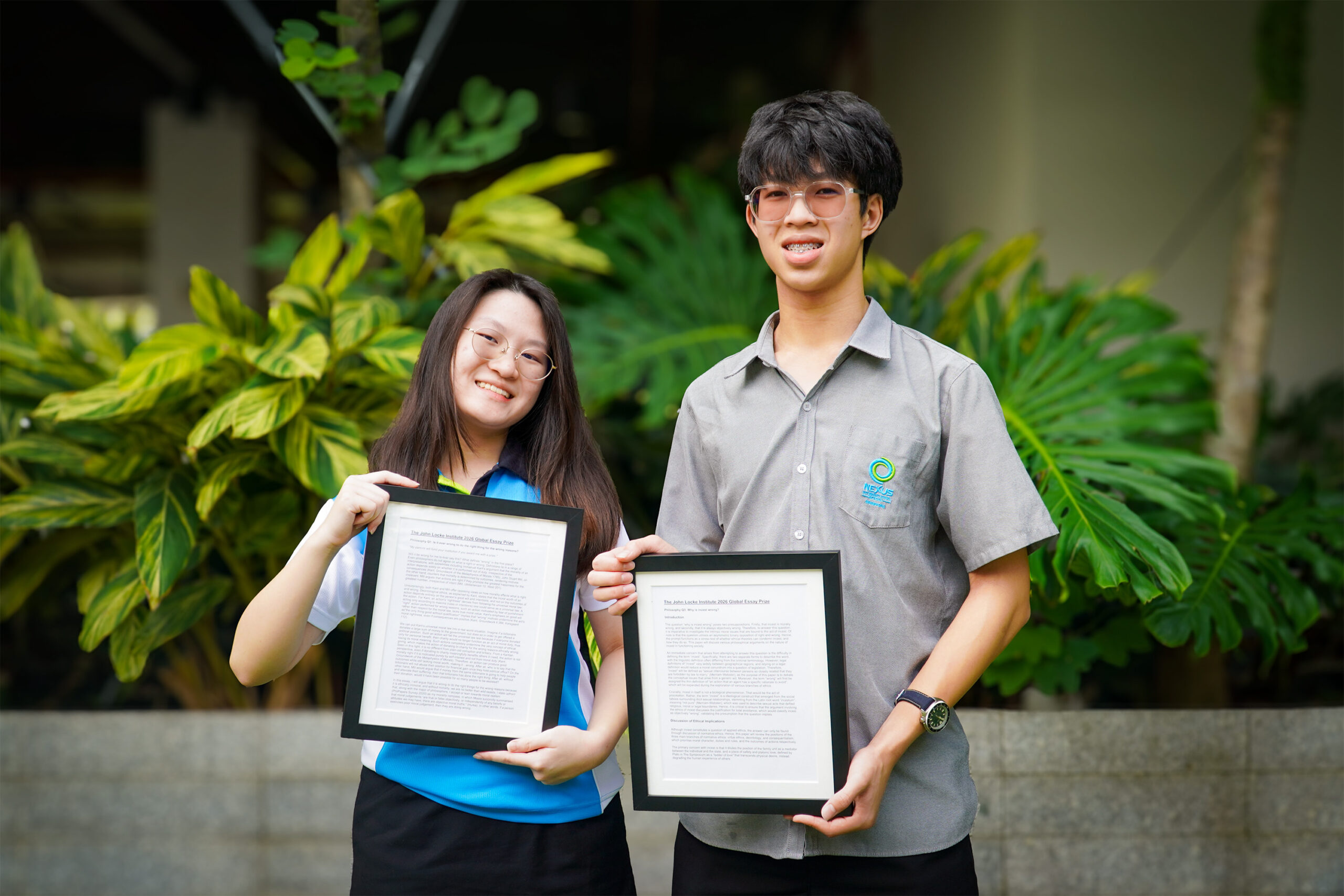
At Nexus International School (Singapore), we encourage our learners to pursue their interests, think critically and challenge themselves beyond the classroom. This year, we are celebrating two learners who have done just that. Ryan, in Year 13, and Sien, in Year 11, were both shortlisted from over 100,000 entries for the 2026 John Locke Global Essay Competition, an internationally recognised competition that invites young people to explore complex questions through independent research, critical analysis and persuasive writing.
Both learners entered the Philosophy category, joining students from 183 countries around the world in tackling challenging questions that extend well beyond the school curriculum. We spoke to Ryan and Sien about what inspired them to enter, their interest in philosophy, and what they learned through the experience. Sien also travelled to London to attend the competition’s academic conference and awards ceremony, where she had the opportunity to meet other young people who share her interests.
What is the John Locke Global Essay Competition?
The John Locke Global Essay Competition encourages students to explore challenging questions across a range of disciplines, developing their independent thinking, depth of knowledge, clear reasoning and persuasive writing.
Essays are assessed by a panel of senior academics drawn from leading universities, including Oxford, Cambridge, Harvard, Princeton and Stanford. For students, the competition offers an opportunity to engage with complex ideas, strengthen their academic writing and receive expert assessment of their work.
Being shortlisted is a significant achievement, reflecting the thought, research and effort invested in each essay. In 2026, there were over 100,000 entries with only approximately 17.5% of essays being shortlisted for the final round.
We caught up with Ryan and Sien to learn more about what inspired them to take part, why they chose philosophy, and how they approached the challenge of developing their essays. They also shared what they learned from the experience and, for Sien, what it was like to attend the awards ceremony and academic conference in London.
Hear From Nexus Singapore Finalists in the John Locke Essay Competition
Why did you decide to enter the competition?
Sien: The competition was first introduced to me by Mr Raza, but later I decided to join because I wanted to challenge myself to explore complex, open-ended questions outside the school curriculum and engage deeply with rigorous academic writing.
Ryan: I enjoy writing, and the John Locke Essay Competition also functions as a super-curricular activity for university admissions.
What interests you about philosophy?
Sien: I was first introduced to the word ‘philosophy’ when I watched The Lion King as a young child, and since then I have always been fascinated with the concept of what philosophy is all about.
Philosophy challenges me to examine the fundamental principles behind our choices and beliefs in this world. It forces us to question whether actions are objectively true or false regardless of perspective and provides ideas and questions to analyse real-world dilemmas beyond surface-level outcomes.
Ryan: I find philosophy to be the apex of the pyramid of knowledge disciplines which allow humankind to glean insight into existence on different levels.
Specific to the discipline, I am a firm proponent of the belief that philosophy, particularly regarding ethics, epistemology and politics, poses one of the most direct avenues for individuals to become more aware of what it means to exist and live. In addition, the study of philosophy facilitates the building and sharpening of worldviews.
Beyond the discipline, I find reading philosophy to be one of the best tools in learning how to build a train of thought, which has immense transferable benefits to the vocalisation process and presentation skills.
Why did you choose your particular essay question?
Sien: I chose my question because I was fascinated by the inherent ethical tension between intent and outcome. It directly addresses whether moral worth stems from duty and motivation or purely from external consequences.
Ryan: Controversial questions, especially those discussing morality, are fascinating as they allow me to challenge existing ethical beliefs I hold, examining the implications of a society regarding certain actions as ethically ‘right’ or ‘wrong’.
Developing critical thinking through academic challenges
Writing a philosophy essay requires more than having an interesting opinion. Learners must research different perspectives, construct a convincing argument and communicate their ideas clearly within a limited word count.
What was the biggest challenge you faced while writing your essay, and how did you overcome it?
Ryan: A significant obstacle I encountered was keeping to the word count, as I aimed to discuss virtue ethics, deontology and consequentialism within 2,000 words. To overcome this, I had to practise consistent removal of fluff to ensure my line of argument was concise, allowing my thought process to be easily conveyed.
Sien: A major challenge was recognising and writing about opposing ethical frameworks, specifically Kantian deontology, which emphasises good will and universal duty, against Millian utilitarianism, which focuses on consequential outcomes.
I overcame this by examining real-world thought experiments and contemporary examples, such as ulterior motives in charitable giving or political actions, to illustrate how wrong motives undermine moral integrity even when producing positive results.
Their approaches highlight the importance of considering different perspectives, questioning assumptions and developing well-reasoned arguments. These are skills that extend beyond academic writing and help learners engage thoughtfully with the world around them.
Taking learning beyond the classroom: Sien’s experience in London
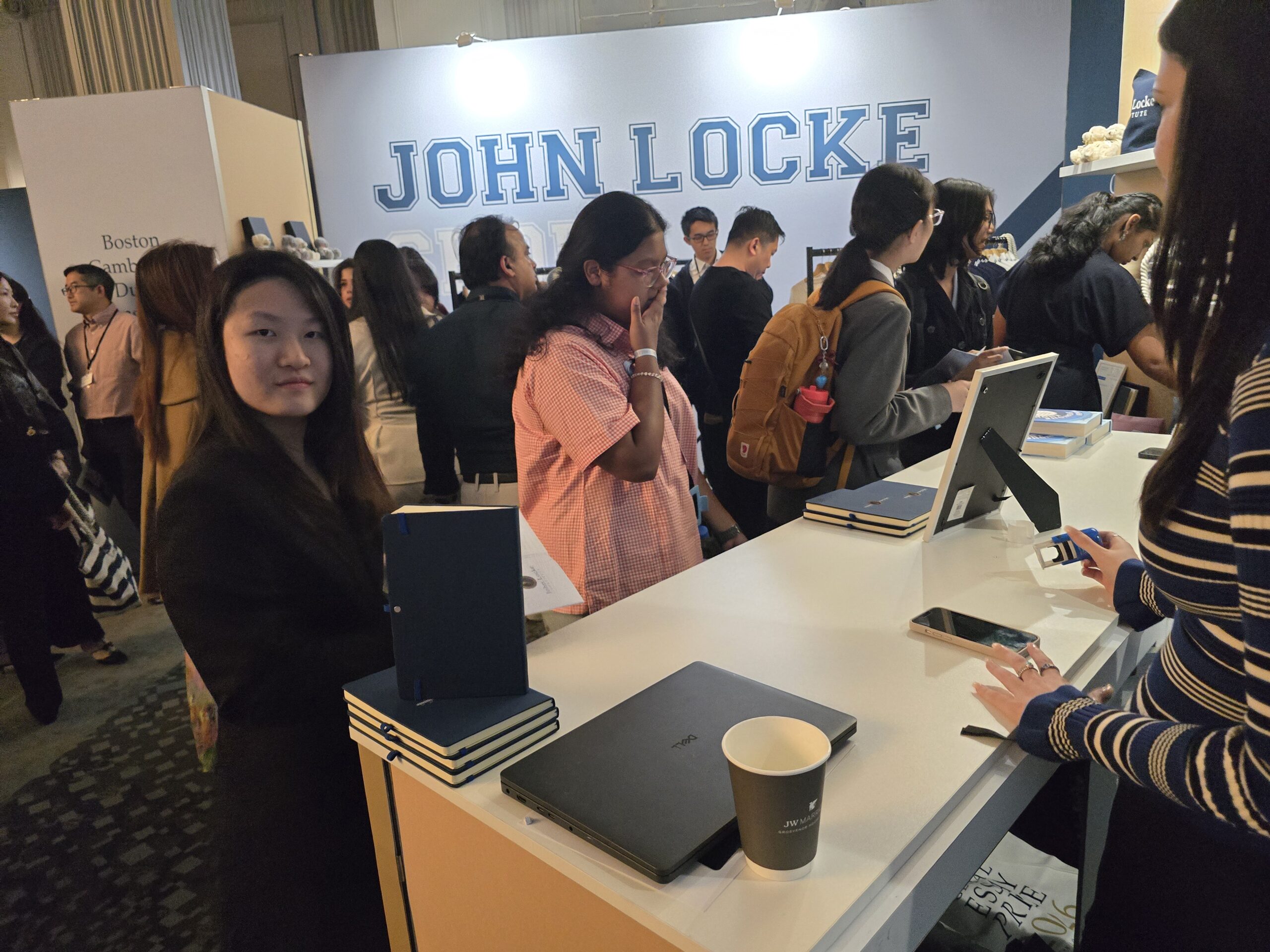
Being shortlisted also gave Sien the opportunity to travel to London to attend the competition’s academic conference and awards ceremony, where she met other students who share her passion for philosophy.
What was the experience like, and what stood out to you?
Sien: The trip to London was pleasant and the event organisation itself was highly sophisticated. The speakers were passionate when delivering their lectures. The participants there were highly energetic, taking notes and asking questions during presentations and panels. I made some friends there who share similar interests.
One thing that really surprised me was how motivated many students were when we were given the opportunity to ask questions. Some students were standing on chairs, and others were even standing on the tables and waving their table numbers in order to get called upon; that was quite a scene!
For Sien, the experience was an opportunity to connect with like-minded students from around the world and see first-hand the enthusiasm and curiosity that the competition inspires.
Celebrating academic excellence at Nexus
Congratulations to Ryan and Sien on being shortlisted for the 2026 John Locke Global Essay Competition. Their achievements reflect the curiosity, independent thinking and commitment to learning that drive them to explore ideas beyond the classroom.
At Nexus, we believe academic excellence is about more than examination results. It also means giving learners opportunities to pursue their interests, take on meaningful challenges and develop the skills to question, analyse and understand the world around them.
Discover more about learning at Nexus on our Innovative Learning page.