We are located in central Singapore with close access to two MRT lines and various bus stops.
1 Aljunied Walk, Singapore 387293
How Nexus Are Building Confident Writers in a Digital Age
At Nexus, we have long been recognised for our innovative approach to digital learning, a commitment that has earned us multiple awards. However, innovation isn’t just about having the latest device or using the latest technology; it’s about knowing when to use it, and more importantly, when to put it down.
This year, we have introduced a powerful new digital component to our Language Arts curriculum: Writer’s Toolbox. As one of the only international schools in Singapore using this resource, we are at the forefront of combining advanced technology with the timeless craft of writing. Our Primary school teachers share what the introduction of Writer’s Toolbox has meant for them and the learners they teach below.
A Shared Language for Every Learner
One of the most challenges in primary education is ensuring that as a child moves through Years 3 to Year 6, the way we talk about writing remains consistent. Writer’s Toolbox provides our teachers and learners with a “shared language.”
Whether a learner is in Year 5 or Year 3, teachers are now using the same terminology to discuss sentence precision and structure. Both Ms Teresa, Year 3 Homeroom Teacher and Year Leader, and Ms Suzie, Year 5 Homeroom Teacher and Assistant Year Leader for Year 5, explain how this consistency removes the “reset button” each year. By establishing these patterns early, we allow learners to build momentum and confidence as they progress through the school, rather than relearning definitions every August. It also provides our learners with a shared language that they can use if relocating to their home countries or elsewhere, no matter what curriculum they study.
AI Feedback vs. The Human Touch
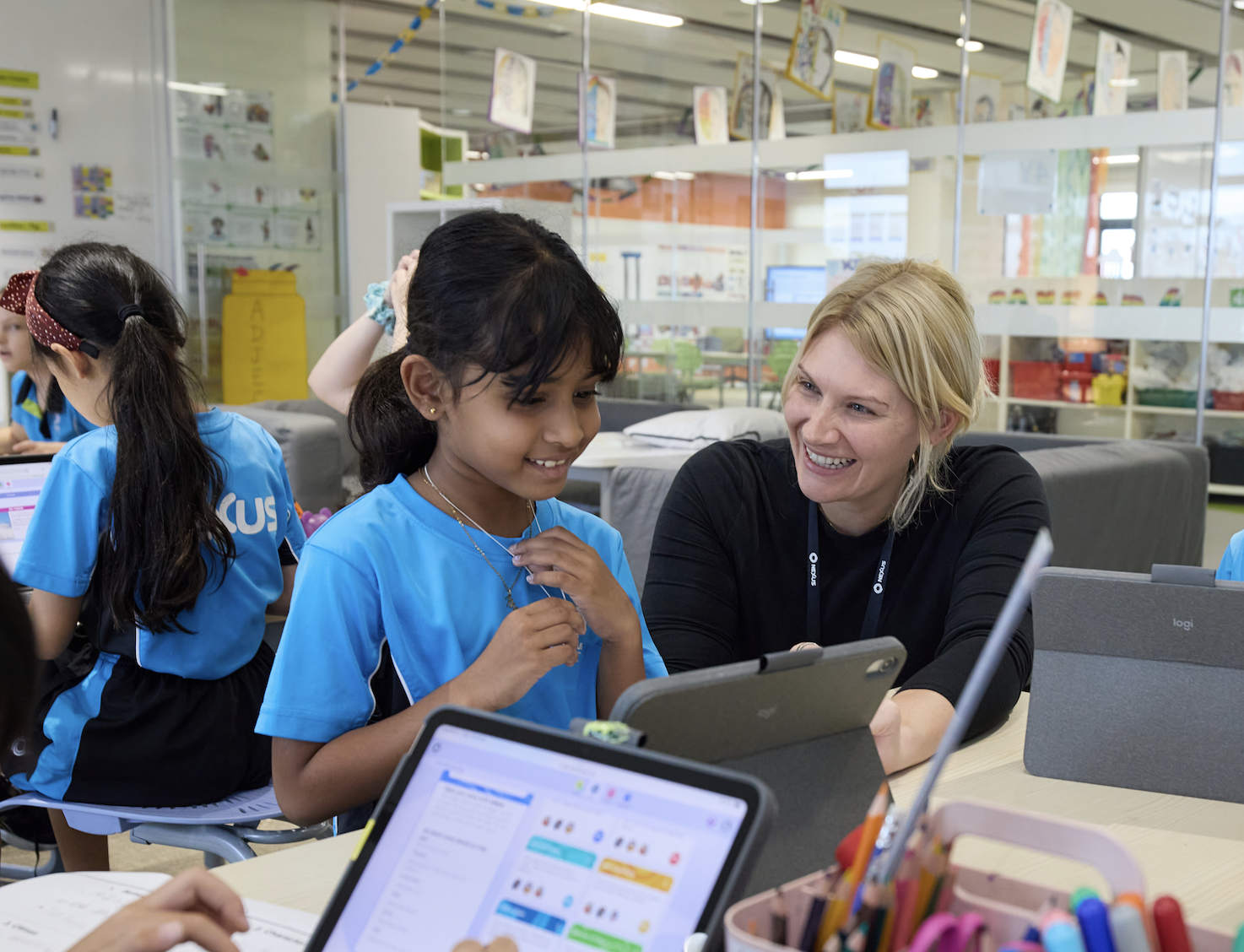
One of the key features of Writer’s Toolbox is that it utilises an AI feedback tool that acts as a 24/7 writing coach. When a learner types a sentence, the tool provides immediate, visual feedback. This doesn’t replace the teacher; instead, it elevates the teacher’s role from proofreader to mentor.
Fostering Independent Growth: By handling basic structural queries, Writer’s Toolbox allows learners to be self-sufficient. As Ms Suzie observes, this independence empowers learners to solve problems in real-time.
Prioritising Quality Over Quantity:Ms Shiv, Year 6 Homeroom Teacher and Assistant Year Leader, has noted that the immediate feedback loops force learners to slow down. Instead of rushing to reach a word count, they are pausing to consider the impact of a single verb or the rhythm of a paragraph.
The Power of Metacognition: Beyond just “correcting” errors, Writer’s Toolbox explains the why. It coaches learners to understand the logic behind a semi-colon or why a specific sentence starter adds variety. This helps learners develop the knowledge as well as the skills of how and when to use a particular grammar point, as well as ensuring that learners can explain the strategic choices they make in their writing.
Why Handwriting Still Matters
Despite our award-winning digital status, we remain firm believers in the power of the pen. Jessica Lindsay, our Language Arts Coordinator, emphasises that Writer’s Toolbox is an enhancement, not a replacement.
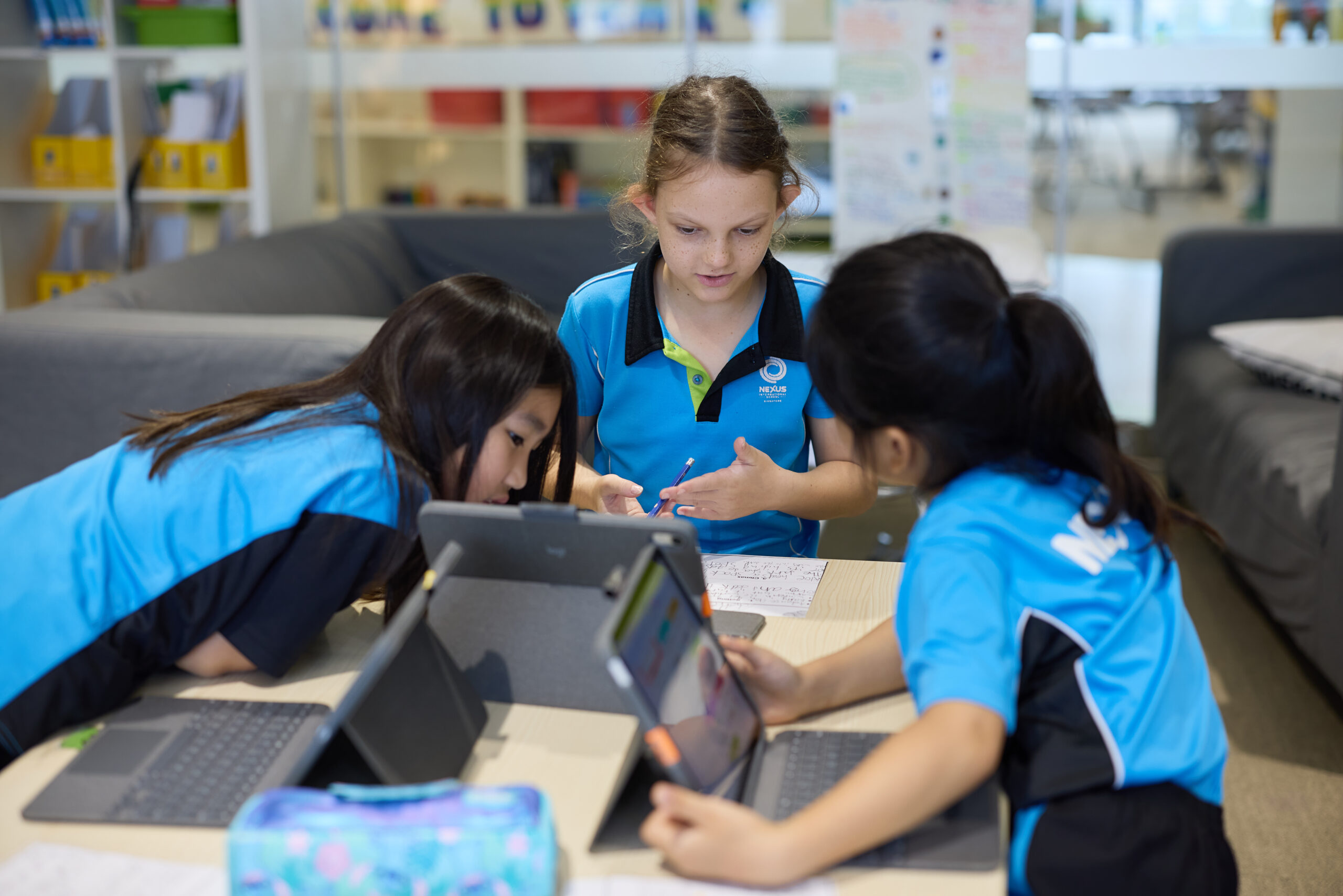
In our classrooms, we maintain a deliberate balance: roughly 30% digital engagement and 70% writing by hand. “Handwriting is still essential, and that’s something we are very deliberate about. Writer’s Toolbox hasn’t replaced writing in books, and it never will.”
Our teachers often use “offline” activities like Sentence Trains, tactile, physical components of a sentence that learners manipulate by hand, to cement the logic of grammar before they ever touch a keyboard. By the time a learner opens their device, they are often uploading a photo of their handwritten work or using the digital tool to “level up” a draft they have already crafted in their physical notebooks.
Differentiated Learning for Every Child
Every child at Nexus is on their own unique journey. Stephanie Thompson, our Digital Learning Coach, highlights that the true innovation of this tool lies in its ability to scaffold and stretch learning.
For a reluctant writer in Year 3, the daily 20-minute challenges feel like a playful, achievable game, lowering the “barrier to entry” for those who find a blank page intimidating. On the other hand, for a high-achieving writer in Year 6, the tool provides a “high ceiling,” offering advanced prompts and sophisticated sentence structures that challenge them to write at a secondary-school level and beyond.
Looking Ahead
The impact has been so profound in Primary that our Secondary school is already preparing to adopt the framework next year to ensure a seamless transition for our Year 6 learners.
Ultimately, we are not just teaching children how to type; we are coaching them to find their voice. We want our learners to be confident, reflective communicators who understand that whether they are holding a stylus or a fountain pen, the power lies in their ability to craft a message with precision and purpose.
Interested in learning more? Book a tour and see how we use technology to enhance our Language Arts curriculum in person.